Over the course of last week, our team went to dozens of events at Climate Week New York 2026, including deep dives on water, supply chain, and Scope 3; sessions that highlighted collaborations and coalitions harnessing collective action; communications sessions spanning topics as diverse as green claims regulations, leveraging humor to drive action, and engaging communities; and just a few of the many, many sessions centered on AI. It was just a teeny, tiny fraction of the 800-plus events that occurred this week.
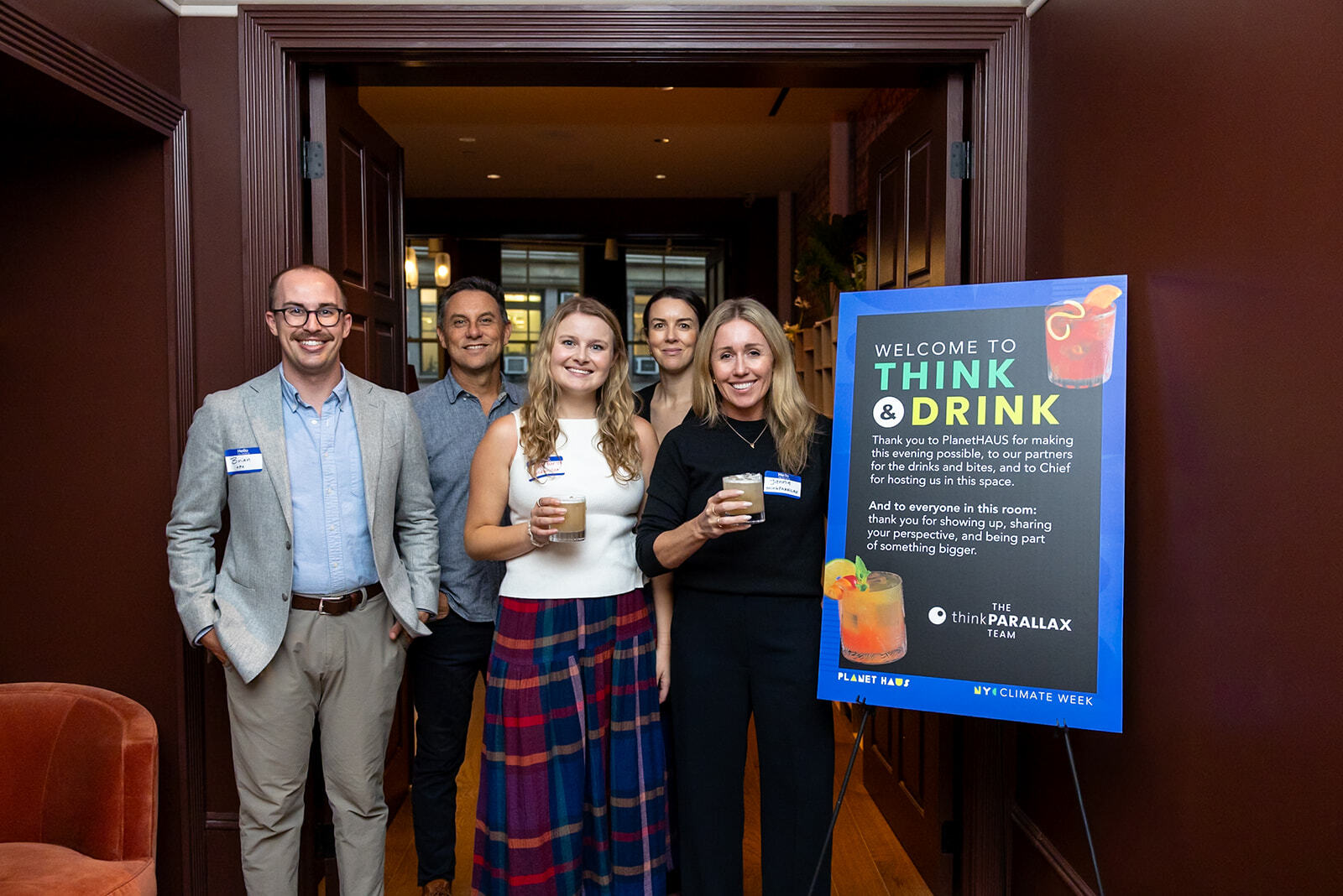
We also hosted a happy hour and a dinner alongside our newly acquired teammates, and had the opportunity to connect with our clients, old friends and colleagues, and leaders in the space.
Here's what we learned.
1. A pause, not a stop
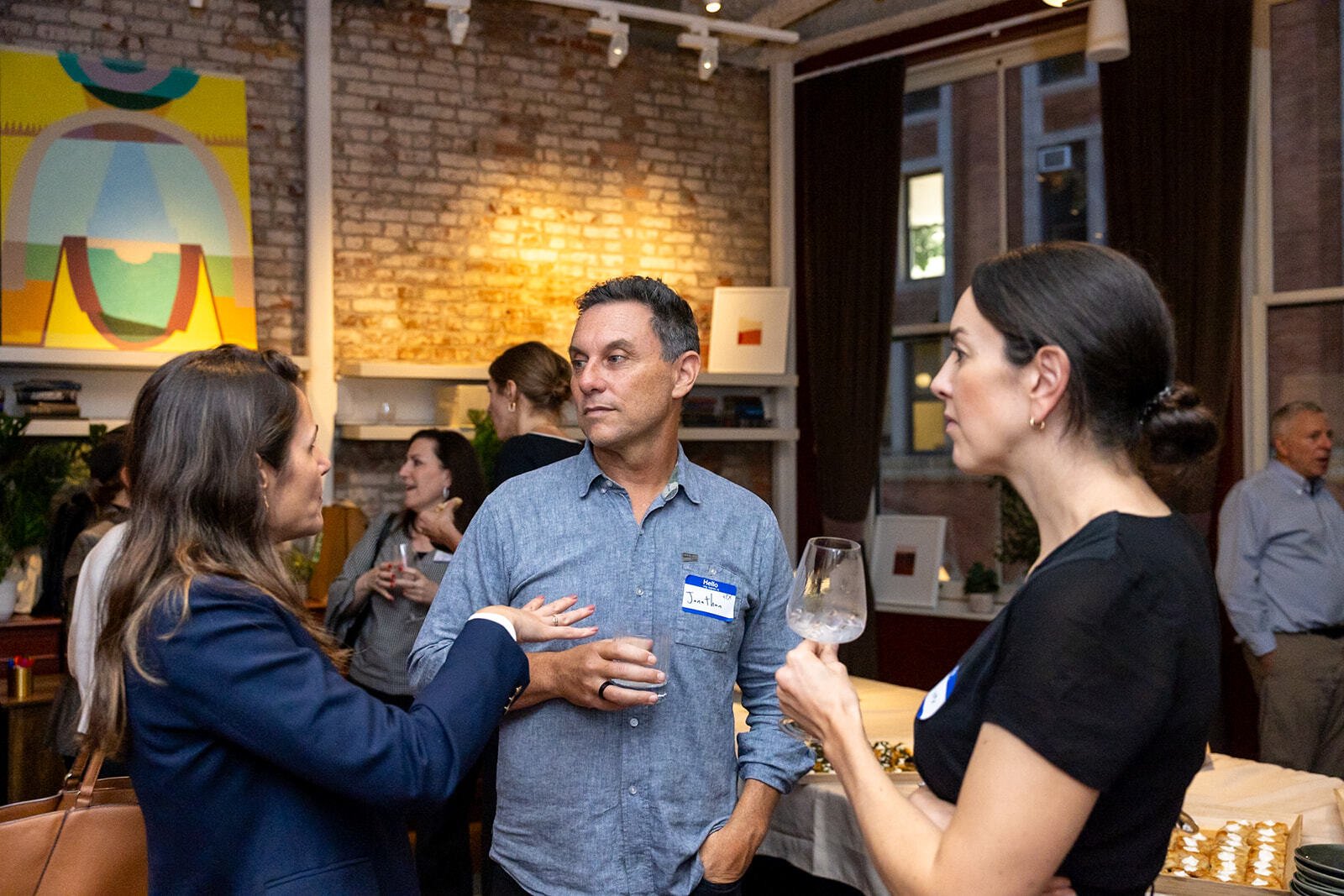
Jonathan Hanwit, Founder & Chairman
Everyone who was committed before is still going full steam ahead. The consensus is that this is a pause, and only a pause, and that the country and business will buy back in. Investors still use sustainability to make decisions.
There was plenty of AI bubble talk, too. And the crowd was what it always is: values-aligned people, young and old, doing cool work. Climate Week is still energizing.
2. Five quotes that got my wheels turning
Janna Irons, CEO
"89% of people want their government to take action on climate change."
Mark Hertsgaard, journalist and co-founder of Covering Climate Now, cited research showing that an overwhelming majority of people worldwide, 80% to 89%, want stronger government action on climate change. The research contradicts the myth that climate action is unpopular.
"What if we could make the sustainable choice the default choice?"
Erin Augustine, VP of Global Sustainability at Oatly, described Oatly's work to make non-dairy milk the default at restaurants and coffee shops, so customers have to opt in to higher-emission dairy milk. It raises the question of where else sustainability could be the default.
"No one cares about your goal, they want to know how it affects them."
Will Sarni, a globally recognized leader in corporate water strategy and Practice Lead for Water and Nature at Earth Finance, on why companies need to stop talking about their promises and start talking about what they're doing and how it affects communities directly.
"We realized our influence may be even more impactful than our footprint."
Jeanette Coombs Lanot, Sustainability Director at Chanel, speaking in a session on Spheres of Influence. It's a corporate climate strategy model built to measure how companies drive systems-level decarbonization beyond traditional emissions accounting.
"My team knows not to come to me with the word 'sustainable' in their copy."
La Toya Sutton, Director of Legal for Business and Product Marketing at The Clorox Company, on why "sustainable" and "sustainability" are vague stand-ins for more credible claims and stronger proof points.
3. The connectors, the auditors, and the crowd
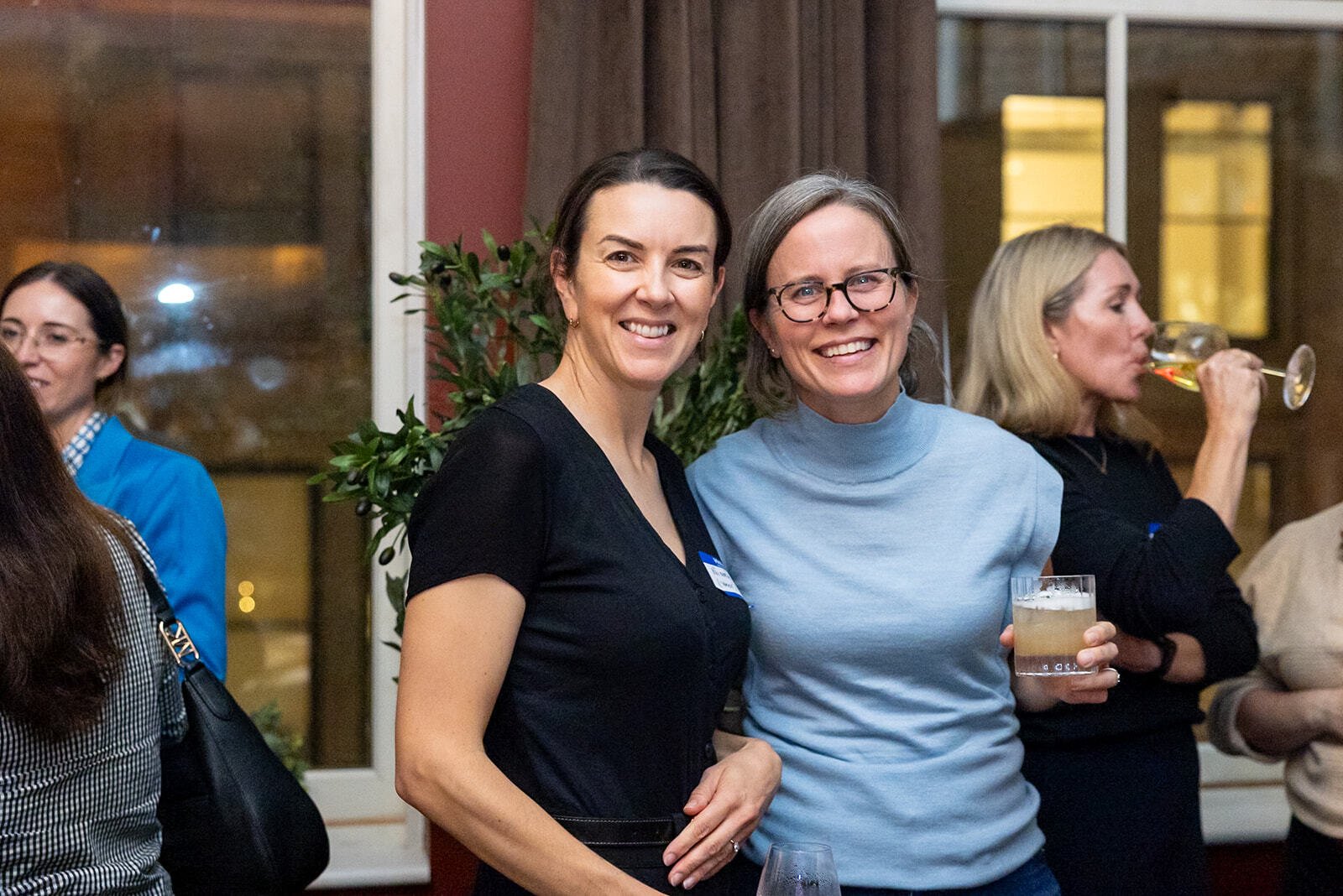
Niamh O'Mara, Director, Sustainability Strategy
- Sustainability teams are the connective tissue. They're juggling a wide portfolio that includes reporting, compliance, risk, supplier management, and EPR. What every team I spoke with has in common is the role they play inside their organizations: they bring a cross-functional lens and help the whole company respond to whatever gets thrown its way.
- Audit readiness is on everyone's list. Moving toward assurance is a priority now, even for smaller companies. Technology can help, but there are too many solutions on the market, and AI isn't the perfect answer yet.
- The sustainability community keeps growing. I first went to Climate Week in 2014 or 2015. Every time I go back there are more people and more events, and they aren't all sustainability people. I now meet people from all kinds of backgrounds who are working on these topics and initiatives. Inside a company, the sustainability function can sometimes feel like a solo effort, so gathering with such a great community is heartening.
4. Energy, Scope 3, and the people doing the work
Joe Nash, Senior Strategist
Energy policy keeps taking shape. Energy laws and regulations are still forming, which makes energy reduction and cost strategies even more important.
Scope 3 is still daunting. Businesses across industries are still struggling with Scope 3. The biggest challenges are data collection and the validity of calculations that rely on estimates.
Community keeps us moving. When everything feels uncertain, it's important to find community within sustainability and keep moving forward for the sake of positive change.
On a more personal note, it was lovely to see old and new coworkers and clients throughout the week. This field is full of incredible professionals who keep making a difference in their day-to-day work.

5. Thinking in generations, designing for the customer
Evelyn Burton, Director, Sustainability Strategy
Indigenous-led conservation brings a longer view. One session, "Indigenous-Led Conservation: Sovereignty, Stewardship & Natural Climate Solutions," looked at returning land to Indigenous tribes. In the two case studies, the land had been managed by private timber companies. Most of it is now used for conservation, but timber is still an important commodity for the tribes and their communities. The difference is the timeline: tribes take a long-term view, and planning for seven generations and beyond is a common principle. The speakers also noted that many of these conservation practices build climate resilience, for example by reducing wildfire risk. As more companies start thinking about climate risk and resilience, Indigenous-led conservation may be worth considering.
At Starbucks, EPR starts before the packaging. A representative from Starbucks talked about extended producer responsibility (EPR) and how everything the company does has to line up with its customer-first business objective. She used the Unicorn Frappuccino as an example: a drink known for its bright pink, purple, and blue swirls. Swapping its clear plastic for a more sustainable material that hides the drink defeats the purpose of a product built to be seen. Starbucks has found that approaching EPR holistically, starting with the product before it's ever packaged, is key to meeting EPR goals while still putting the customer first.
6. Collaboration is key
Christine McElhinney, Project Director
Collaboration was the throughline of my Climate Week. I saw it in a panel of athlete activists using their fan bases and platforms to push for real climate action. I heard it in conversations with clients across industries who are turning to their peers to navigate regulations, sharpen their reporting, and drive collective impact. Individual action still matters, whether you're a person or an organization, but collaboration is what moves the needle. At a time when our country and the world can feel divided, it was a powerful reminder of what's possible when we choose to work together.

7. From commitments to execution
Brian Chmelik, Head of Growth
Fewer commitments, more progress. This year, Climate Week wasn't a stage for new targets or net zero pledges. The focus was on how firms are progressing against the commitments they've already made, where that progress has stalled, and what needs to happen to reach their goals. Some firms have stopped communicating their commitments but are still making progress operationally.
Practical levers for decarbonization. Participants got tactical about how to decarbonize operations, supply chains, and products. There are clearly still gaps: in available resources, in the relative cost and complexity of solutions, and in how progress gets measured. The market's next challenge is finding ways to execute on decarbonization and communicate that progress transparently.
Multiple perspectives on AI and sustainability. AI came up constantly, but there was no agreement on where the biggest challenges are, who's responsible for making progress, or how organizations across the AI value chain should manage risk and opportunity. Key themes included:
- Water and power use from AI data centers
- Alignment and bias risks
- The future of work
- Using AI to help meet other climate commitments
We expect the conversation to keep evolving as the data center buildout continues and leading models get more capable.

8. Making climate action felt, counted, and priced
Shara Narsipur, Senior Strategist
We know climate matters, but we haven't made it matter in the ways that move people: emotionally, economically, and systemically. Culture changes when people feel something. Capital moves when value is measured. Systems shift when incentives change.
- Comms: lead with belonging. The strongest stories we heard were about human connection, community impact, wellbeing, and place. Travel and ecotourism work because they tie climate to things people already love. The job is to make a climate-positive life look desirable, not just responsible. Inspiration builds culture, and fear mostly builds paralysis. So how do we build an emotional case strong enough that people want to take part, and not just agree in principle?
- Business case: ROI is the entry point. The business case has never mattered more. A climate solution that doesn't pencil out for a farmer, a supplier, or a CFO won't scale, however good its intent. The missing piece is science that puts a number on the value of good climate work, in terms investors already trust.
- Financial systems: follow the money and find the risk. Environmental crime and financial systems are deeply linked. Money is the incentive behind almost everything, so the fix has to run through the financial sector too. Financial institutions are exposed to climate and nature risks they can't see yet, like illegal mining in their portfolios and supply chains. Banks haven't historically reported climate-related risk, and that gap trickles down to legislators, who can only act on what they can see. The core problem is that enforcement is reactive: we can only prosecute crimes that have already happened. Disclosure and risk reporting are how we get ahead of the harm.
John Davies is the Director of Content at thinkPARALLAX. With more than 15 years of experience in journalism, editorial leadership, and sustainability communications, he specializes in sustainability reporting, thought leadership, and brand storytelling.